The Grocery Store Is a Classroom: A Field Guide
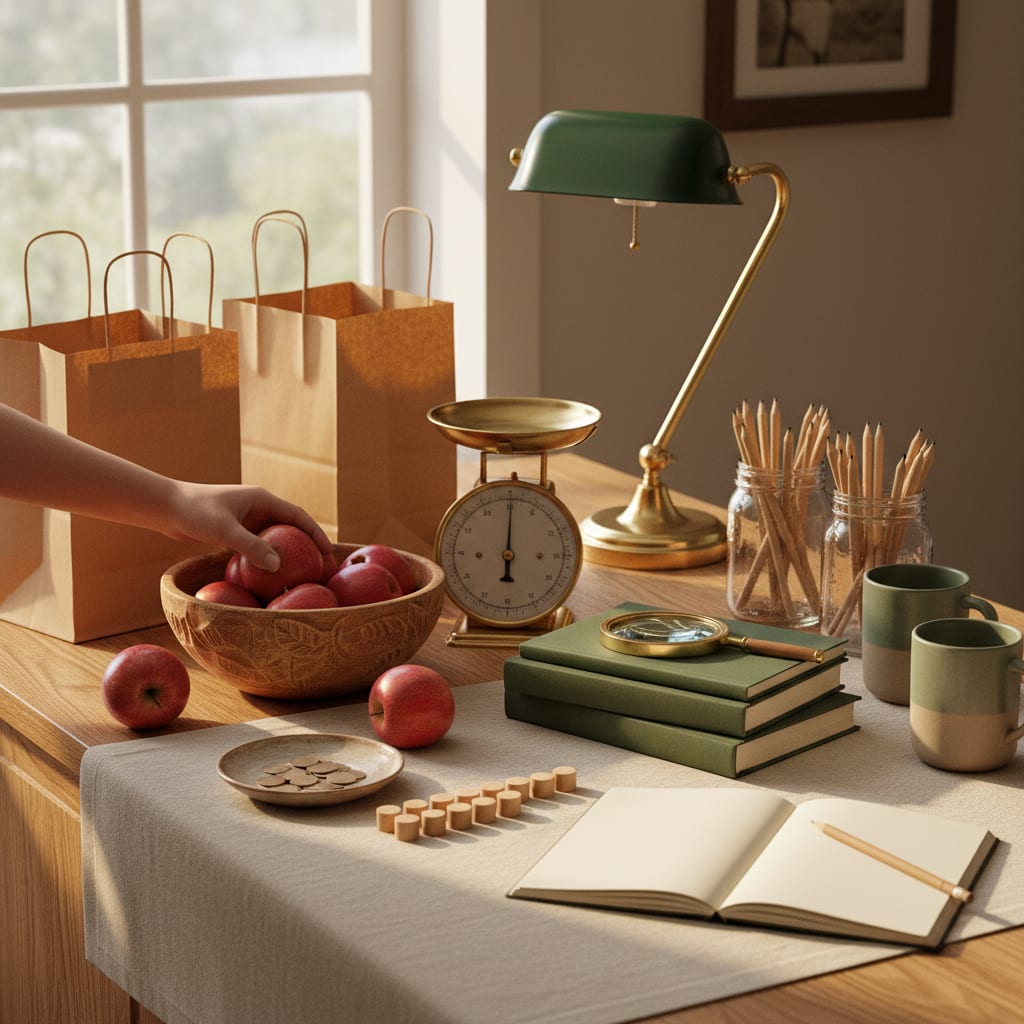
Grocery store learning activities are the easiest errand-schooling there is, and they scale by age: toddlers count apples into the bag and hunt colors; early readers work the signs and labels like flashcards that happen to be dinner; elementary kids estimate the cart total, compare unit prices, and manage a small budget line of their own. None of it requires preparation, printables, or pretending the trip is something other than shopping. The store does the lesson design for you — it’s a building full of numbers, words, categories, and money, restocked nightly.
The original Homeschooled Mom knew this so thoroughly she wrote it three times — “Grocery shopping learning opportunities” parts one, two, and three sit in this domain’s 2011-era archive. I was raised on the method (my mother could turn a Wisconsin supermarket into a standardized test), and I now run it on my own three. This is the consolidated field guide: one trip, every age, no laminating.
Toddler tier: the cart seat is a high chair with a syllabus
A toddler in the cart seat is a captive audience in the best sense. Count everything that goes in the bag — one, two, three apples — and let her drop them in, which is one-to-one correspondence wearing a chore costume. Hunt colors down the produce wall (“find something red”), name everything you touch, and hand over safe items to hold and pass back, which is toddler-ese for sorting. This is also, frankly, toddler management: an engaged two-year-old is not performing her opera in aisle five. The same principle that runs our school day around the toddler runs the errand: give the smallest person a real job.
Early reader tier: the store is environmental print
For a kid mid-phonics, the store is a reading lab where every word is attached to something that matters. Have them find the aisle by its sign, hunt the M-I-L-K on the carton, match the shopping-list word to the shelf label. Hand them the list (pictures plus words at first) and promote them to navigator: “we need three things in this aisle — read me the first one.” It’s the same decoding practice as the kitchen-table reading lesson, but self-checking and stealth-graded: read the label wrong and you’re holding the wrong cereal, a consequence no worksheet can match.
Elementary tier: arithmetic with stakes
This is where the store outperforms most math curricula. Standing assignments at our house: estimate the running cart total and see who lands closest at the register (rounding, mental addition); work out which peanut-butter jar is actually cheaper using the shelf’s unit-price tags (division, and a life skill most adults skipped); weigh the produce (measurement); pay cash at the register sometimes and check the change (the money arithmetic that apps have nearly made extinct). My 8-year-old currently runs a small snack budget — a few dollars, her call, tax included — which teaches estimation, trade-offs, and occasionally grief, all before lunch.
Making it a rhythm without making it a production
The trap in errand-schooling is turning a Tuesday shop into a forty-five-minute enrichment event with a clipboard. Don’t. Pick one assignment per kid per trip, matched to their tier, and let the rest of the trip be a normal errand — the short-formal-day arithmetic applies here too: ten engaged minutes beat a produced hour. The rhythm matters more than the intensity; the weekly shop happens fifty-two times a year, which makes it the most reliably recurring lesson slot on your calendar. Some weeks it’s just apples counted into a bag. Over a childhood, it adds up to something no unit study can fake: the durable conviction that numbers and words are for using.
FAQ: grocery store learning
What can a toddler learn at the grocery store?
Counting with real objects, color and shape hunting, vocabulary by the cartload, and sorting (things we hold gently, things that go in the bag). One running assignment per trip is plenty — the goal is engagement, not a syllabus in the cart seat.
How do I make grocery shopping educational without slowing it down?
One assignment per kid, chosen before you park: the toddler counts produce, the reader navigates one aisle, the big kid estimates the total. Each adds roughly zero minutes — you’re re-labeling waiting time, not adding stations to the trip.
What math can kids practice while shopping?
Counting and one-to-one correspondence for littles; estimation and rounding on the cart total; unit-price comparison (division); weighing produce; making change with cash. Unit prices are the sleeper hit — genuinely useful division your kid will use for the rest of their life.
Does errand-schooling really count as homeschooling?
Yes — applied practice is where taught skills consolidate, and for logging purposes it’s legitimately instructional time in the subjects it exercises (check your state’s record-keeping rules for how to note it). The kitchen table teaches the skill; aisle five is the exam.