Bedtime When an Older Sibling Studies Late for Exams
When an older sibling starts revising late and the youngest suddenly wakes at eleven, the fix is almost always to move the studying rather than the sleeping. A homeschool family has a lever a school family does not: the teenager’s hardest hours are ours to place, so the heavy revision can go into the morning and the evening can be handed back to the small child. Where a late block genuinely cannot move, the job splits into three ordinary variables — light under the door, intermittent noise, and traffic past the bedroom — and the little one’s bedtime stays exactly where it was.
Why the eleven o’clock wake arrived now
Nothing changed about your two-year-old. What changed is that the house used to go quiet at half past eight and now it doesn’t.
A small child’s night is held together by the same thing their day is: sequence. Bath, book, dark, quiet — and the quiet used to be total by nine. Now there is a strip of light under a door at ten, a kettle at twenty past, a chair scraping, and somebody going to the bathroom at eleven. None of those would wake an adult. All of them land in the window where a toddler surfaces between sleep cycles and decides whether to go back down.
This is not the same problem as the week an older child starts a school or co-op term, which upends the morning and takes the nap with it — that one is covered in what happens to toddler sleep when a sibling starts school. Exam season does the opposite: the day is untouched and the evening is unrecognisable.
The homeschool move: put the hard hours in the morning
This is the whole advantage of the situation. A teenager at school revises in the evening because the day is already spent. Ours is not. If your fifteen-year-old is preparing for a standardised test, an AP exam or a dual-enrolment final, the block of concentrated revision can sit at nine in the morning instead of nine at night, and nothing external forbids it.
In practice that means treating revision as a subject on the schedule rather than as homework that happens afterwards — it goes in the timetable the way math does. Our sample homeschool day runs on the same principle: the hardest work goes where the best attention is, not where the leftover time is.
Two honest caveats, because this is not free:
- Teenagers want their evenings. Moving revision to the morning costs the social hours, and a sixteen-year-old under exam pressure has a legitimate say in that. Negotiate it as a trade — the morning block for a genuinely free evening — rather than imposing it.
- Some study belongs at night. Memorisation and review often work late; timed practice papers rarely do. If you can only move one thing, move the long, loud one.
When the late block can’t move
Sometimes it can’t: an evening dual-enrolment lecture, a tutor’s only slot, a study group that meets when the other families are free. Then you stop negotiating with the timetable and start working on three physical variables, in this order.
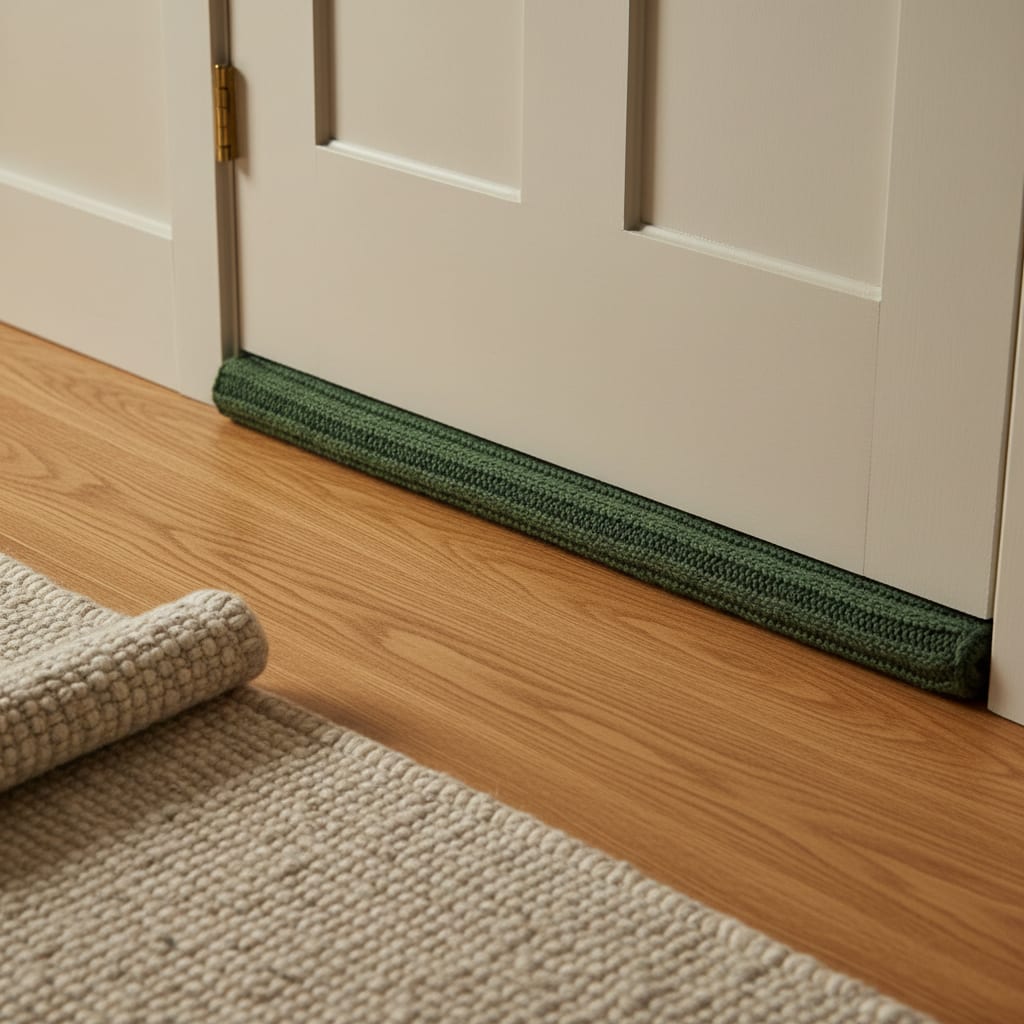
Light. The strip under a bedroom door is brighter than people think once a room is properly dark, and it is the variable that most often does the waking. A draft-stopper strip on the study-room side of the door kills the light and some of the sound at once — something like the Suptikes under-door seal takes two minutes to fit. A folded blanket along the gap tests the theory for free first.
Intermittent noise, not loud noise. Steady sound is not the enemy; change is. A dishwasher running the whole time is easier on a sleeping child than one conversation at normal volume at 10:40. That is what a sound machine is actually for — raising the floor so the gaps between household noises stop being audible. Betteroo’s rundown of what separates a decent unit from a cheap one is a reasonable starting point if you are buying your first.
Traffic. Decide once, out loud, where the evening kettle, the bathroom trip and the snack raid happen relative to the little one’s door, and route them the other way if you can. If you can’t, that is the argument for moving the desk rather than the child.
Do not slide the small child’s bedtime later
The instinct, when the house is awake until eleven anyway, is to let the youngest drift later so they are asleep through the noisy part. It backfires reliably: an overtired toddler wakes more at the cycle boundaries, so you get the same eleven o’clock wake from a child who has had forty minutes less sleep.
Hold bedtime where it is and fix the environment around it. If it has already drifted — and after three weeks of exam season it often has — pull it back in increments rather than in one jump; shifting bedtime fifteen minutes at a time works here exactly as it does after a holiday.
Handling the wake itself
By the time you notice the pattern, the eleven o’clock wake is half environmental and half habit. The environmental half you have just fixed. The habit half needs the most boring three nights of your life.
Go in, keep the room dark, say the same six words, stay under a minute, leave. No lifting into the bright part of the house, no snack, and — the one that catches homeschooling families out — no letting the revising teenager do the settling, however willing they are. A fifteen-year-old who appears at the cot with a lit screen is the most interesting thing that has ever happened at eleven o’clock. If a sibling’s presence is already load-bearing at bedtime, the sibling-in-the-room problem untangles that properly.
Most families see it settle in three to five nights once the light and noise are handled. If it runs past a fortnight, the trigger is not the studying.
Keep the evening sequence intact
Whatever else exam season does, the last forty minutes before the youngest goes down should look identical to February. Same order, same room, same person where possible. Betteroo’s walk-through of a workable evening sequence is a sane template if yours has quietly eroded.
Say to the teenager, once, that none of this is a complaint about them. Exam pressure is real, the studying is the right thing to be doing, and a household that reorganises itself around a sixteen-year-old’s hardest fortnight is doing something rather good. The toddler just needs that reorganisation to happen before ten at night rather than after it.
FAQ: bedtime during a sibling’s exam season
How long before the toddler adjusts on their own?
Usually they don’t, because the trigger repeats every night. Unlike a one-week disruption, exam season supplies the same light and noise at the same hour for weeks, so the wake is reinforced rather than extinguished. Change the environment and expect three to five nights.
Should the teenager study in their bedroom instead?
Often yes, if the bedroom is not adjacent to the little one’s. Homeschooling families tend to study in the shared rooms because that is where school happens all day, so the evening inherits the daytime setup — nobody decides on it, they just keep sitting there.
Is a nightlight in the toddler’s room worth trying?
It solves a different problem. A nightlight helps a child frightened of the dark; it does nothing about corridor light saying the house is still up. Block the light at the door before adding any to the room.
What about earplugs or moving the toddler to another room?
Moving the child is a last resort — a new room is its own two-week adjustment on top of the one you already have. Exhaust the door, the sound floor and the traffic route first, and remember the whole arrangement ends when the exams do.
The teenager insists mornings are impossible. Now what?
Take the compromise: move one block, not all of them. Putting the single longest or loudest session into the day usually removes enough of the ten-to-eleven activity to stop the waking, and it keeps the negotiation winnable.
Getting the small child’s sleep right is what makes the rest of the house workable during a heavy few weeks, and it is worth a proper look rather than guesswork — Betteroo’s free two-minute quiz gives you an age-matched starting point, and it is a tool rather than magic.