Reading Under the Covers With a Flashlight: What to Do
A child reading under the covers with a flashlight is almost always a good reader who has found a book they can’t put down. That is not defiance, and confiscating books would punish the habit you’ve spent years building. Fix the rules around the reading instead. Give the book a long, legal slot in daylight. Bring the bedtime reading into the open with a warm light and a stop point agreed in advance. Keep the wake-up time steady. Then check the only thing that matters: is your child still getting enough sleep?
The bookworm often shows up somewhere between seven and ten, around the time chapter books finally click. Homeschooling gives you more room to handle it well than most families have, because you control the daytime as well as the night.
Why the flashlight comes out
Few children read in secret to break a rule. Usually several things line up.
- The book has pull. A cliffhanger at the end of chapter nine is doing exactly what its author intended.
- Reading has just become easy. A child who was sounding out words a year ago can now lose an hour in a story. That is a new and powerful feeling.
- Lights-out comes before sleepiness. A child who isn’t tired lies there with nothing to do, and a book fills the gap.
- It’s private. In a homeschool house, the parent sees a child’s reading all day. The book under the blanket is the one nobody assigned.
- It works. Plenty of parents who catch a child at it feel quietly proud, and children notice.
HealthyChildren, the AAP’s parent site, notes in its piece on bedtime routines for school-aged children that routines “can be drawn out almost indefinitely” once a child learns that taking charge delays bed. A hidden book is the quiet version of the same thing.
First, check whether it’s actually a problem
The test is total sleep, not the flashlight.
The American Academy of Sleep Medicine’s consensus statement on children’s sleep says children aged 6 to 12 “should sleep 9 to 12 hours per 24 hours on a regular basis.” Count back from when your child actually wakes. If they’re asleep in time to stay inside that range and get up without a fight, a few extra pages are not an emergency.
The warning signs are the daytime ones. HealthyChildren’s guide to healthy sleep habits lists irritability and difficulty concentrating among the effects of regular sleep loss, and mentions a child who is “zoning out” in school. This is where homeschooling helps. You don’t need a teacher’s report, because you’re at the table at nine in the morning. If the bookworm is foggy through math and short-tempered by lunch, the night reading is costing too much.
Give the book a daylight slot
The bookworm’s real problem is often that the book has nowhere else to go. By evening, the only free time left is in bed. A homeschool day can fix that in a way a school day can’t. Give the reader a long, protected reading block, and make it free reading, not assigned reading. The obvious place is the younger sibling’s nap. In quiet time activities for big kids during nap, silent reading is the first thing on the list, and for a bookworm it’s the hour they’ll defend hardest.
Say it plainly: “You can read that book all through quiet time, every day.” A child who knows the story will be there tomorrow afternoon has much less reason to steal it from the night.
Bring bedtime reading into the open
If you already have a reading slot at bedtime, as in independent reading before bed, the flashlight usually means one thing. The child wants more than the slot gives and has found a way to take it. Don’t abolish the slot. Make it the only reading in bed, and make it honest.
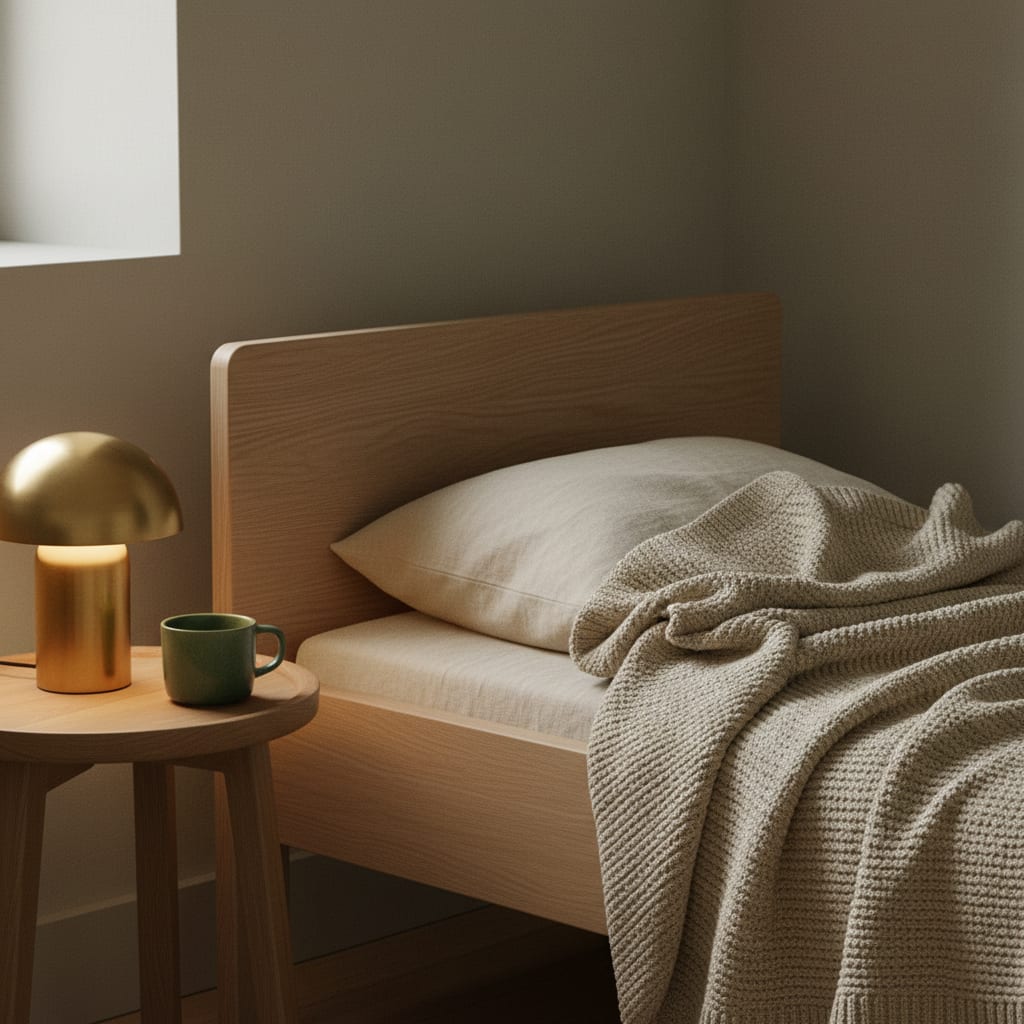
- Swap the flashlight for a proper light. A flashlight under a blanket puts bright light, often from a cool-white LED, a few inches from the eyes. Betteroo’s explainer on why a warm amber light is gentler in the evening recommends warm, dim bulbs under about 2700K for the bedroom at night. A reading light with a warm setting and low brightness is a fair trade for giving up the secret one. A Glocusent neck reading light is one example; its listing names three colors, three brightness levels and a 30-minute timer, so the light ends the session rather than you.
- Agree the stop point before the light goes on. Make it a chapter, or a number of pages. Older children can handle a set time, but “until I’m tired” is not a stop point.
- Stop at the start of a chapter, not the end. Ending on a fresh chapter heading takes the sting out of a cliffhanger.
- The book sleeps across the room. When the light goes off, the book goes on a shelf or a chair, not under the pillow.
- Same rule every night. The night it stretches “because it was a good bit” is the night it becomes negotiable again.
HealthyChildren says that as children get older, parents “should gradually begin to step back and let him become more in charge of his bedtime routine.” A ten-year-old who keeps their own stop point is doing exactly that; one who can’t yet needs you to come back at the agreed point for a while.
When the secret reading keeps happening
If the open arrangement is in place and the flashlight still comes out, treat it as a stalling habit, not a character flaw.
Keep the response dull: take the light, shelve the book, say “Tomorrow at quiet time,” and leave. Some families give one sanctioned exception a night: one extra chapter, traded for a card, and then the card is gone. Betteroo’s walk-through of the one-exception bedtime pass is mostly about preschoolers. It notes that the earliest study of the pass included a 10-year-old, though the research overall is small.
Keep the morning steady too. Homeschooling makes it tempting to let a late reader sleep in. HealthyChildren advises keeping weekend wake-ups “within an hour or so of the usual time” and warns that sleeping in can shift a child’s sleep phase within a few days. The same logic holds on a homeschool weekday. A child who sleeps until nine is often not sleepy at nine at night, and the book comes back out.
If the deeper issue is that your whole family runs on a late clock, is a later bedtime OK for young kids? covers how to tell whether that clock fits the child.
 Little one's evening keeps slipping too?
Betteroo builds a personalized sleep plan for children from newborn through age 6, so the youngest's bedtime holds steady and the reader's slot after it does too.
Take the 2-minute sleep quiz →
Shared rooms and younger siblings
A flashlight in a shared room is the sibling’s problem too. HealthyChildren notes that “lights can go out at different times for different children in the family, depending on how much sleep they need.” So the older reader can have a later lights-out, but read somewhere else, such as your bed or a sofa corner, and move to their own bed when the chapter ends. If they must read in the shared room, use a small amber light aimed at the page.
When it’s something more
Sometimes reading is how a child copes with lying awake, not the cause. If your child can’t fall asleep for an hour or more with or without a book, seems worried at night, or is regularly tired in the day despite a sensible bedtime, talk to your pediatrician. HealthyChildren lists difficulty falling asleep among the most common sleep problems in children and encourages parents to talk to the pediatrician about sleep habits and problems.
FAQ: reading under the covers
Should I take the flashlight away?
Take the secrecy away rather than the reading. Offer an open, warm reading light with an agreed stop point. If the hidden reading continues, the flashlight goes, calmly.
Is reading in bed bad for a child’s sleep?
Not in itself. Reading a paper book is a calm way to end the day. The problems are a bright light at close range, no agreed end, and reading that eats into the 9 to 12 hours the AASM recommends for ages 6 to 12.
How late can an eight-year-old read at night?
There’s no set time. Count back 9 to 12 hours from when your child has to be up, and make sure lights-out leaves them inside that range.