Sensory Play Before Bed: What Settles a Toddler
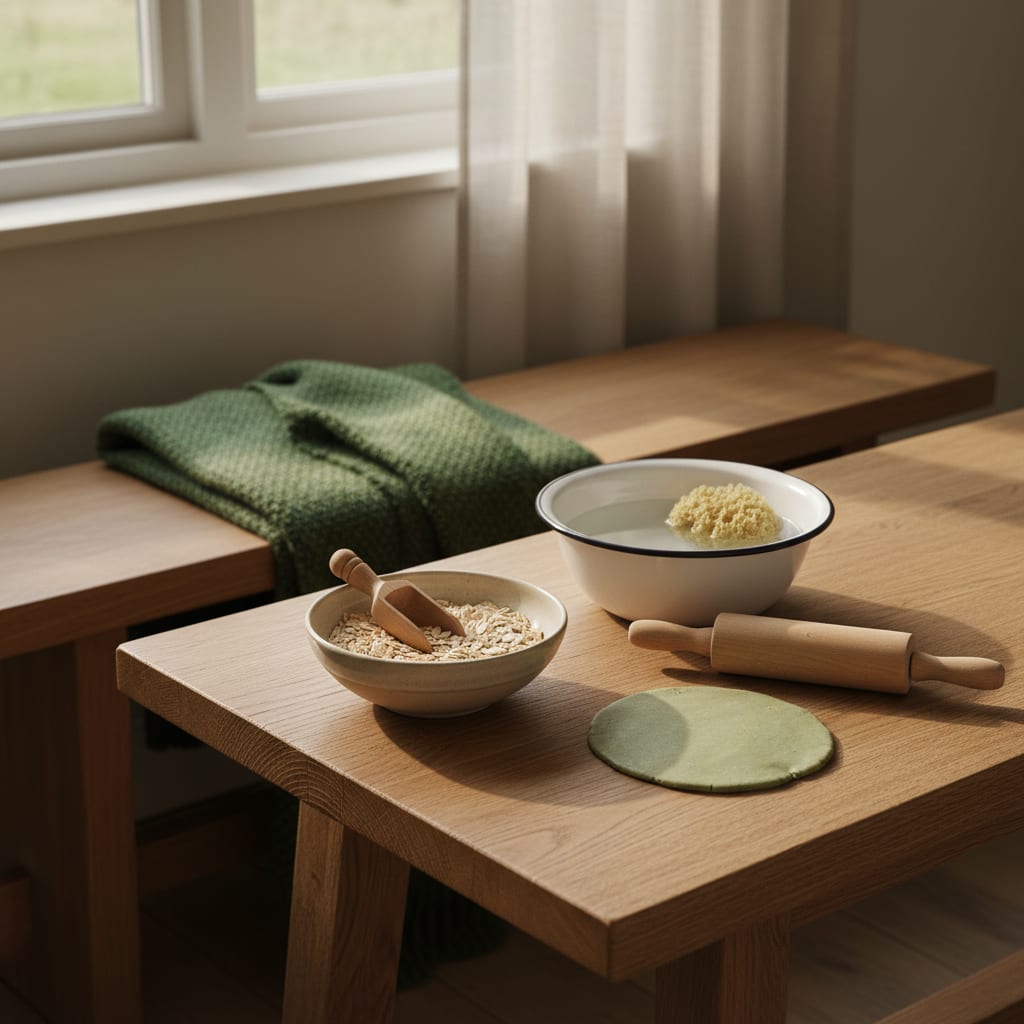
Before bed, slow play that keeps a toddler’s hands busy usually settles them: warm water at the sink, play dough, scooping oats from one bowl to another, or pushing a heavy basket across the floor. Fast, loud and spinning play usually winds them up: chasing, tickling, being swung, crashing into cushions, banging pots, and anything with a screen. You don’t have to ban the second kind. Move it earlier, into the afternoon and outdoors. Then use heavy work as the bridge, and give the last half hour before the routine to the quiet, hands-in kind.
In a homeschool house the timing matters more than the toys, because the loud part of the day tends to arrive at the worst moment.
Why the end of a homeschool day winds the youngest up
All day the two-year-old has been the one told to wait. Wait while your brother reads. Play here while your sister does math. Then lessons finish, and the big kids, finally free, go looking for the most fun person in the house. That is usually the toddler. The chase round the kitchen island, the tickle fight, the piggyback gallop down the hall. It’s lovely, and in our house it used to happen between five and six, exactly when the youngest should have been slowing down.
The pediatric advice on this is plain. The AAP’s HealthyChildren page on bedtime trouble says to set up a quiet routine before bed and admits the temptation: “It may be tempting to play with your child before bed. However, active play may make your child too excited to sleep.” Seattle Children’s sleep hygiene guidance lists exercise among the “high-stimulation activities” to avoid just before bed, and in the same breath says to make physical exercise part of the child’s day, because daytime activity “can help with sleep time many hours later.”
So the goal isn’t less play. It’s the same play, earlier in the day.
Play that tends to settle a toddler
What these have in common is that they’re slow, repetitive and contained. The child sits or stands in one place and the hands do the work.
- Warm water. A washing-up bowl at the sink with cups and a sponge, or the bath itself. HealthyChildren names a bath alongside a story and quiet music as part of a calm pre-bed routine. Water play needs an adult within arm’s reach the whole time, however shallow it is.
- Dough. Rolling, squashing and cutting with a blunt plastic knife is slow by nature. A few cans of something like Play-Doh, which its listing marks for ages 2 and up, live in a lidded box that only comes out at the table.
- A scoop-and-pour bin. Dry oats or crushed cereal in a shallow tub with a measuring cup and a funnel. It’s taste-safe for a child who still mouths things, and the noise it makes is soft.
- Heavy work. Pushing a laundry basket of books across the room, carrying sofa cushions back to the sofa, pulling a loaded wagon. Betteroo’s guide to sensory play, sorted by sense puts the split neatly: “Movement wakes the body up, and heavy work (pushing, pulling, carrying) tends to calm it down.” It also suggests a few minutes of heavy work before bedtime for toddlers who struggle to settle.
- Watching something slow. A sealed sensory bottle turned over and watched while the glitter settles, on the sofa with one lamp on.
- Quiet sound. A song sung in a whisper. Humming. The same three bedtime songs every night.
Keep small items out of a toddler’s bin until they’ve stopped putting things in their mouth. Dried beans and beads can wait until they’re three or older.
Play that tends to wind a toddler up
These are good games, just badly timed in the last hour:
- Spinning, swinging and being thrown about. Spinning the toddler round, “airplane”, swinging them by the arms.
- Chase and tickling. Both build excitement in a child who can’t yet stop it themselves.
- Crashing. A cushion pile to jump into is a brilliant afternoon activity and a terrible 6:30 one.
- Loud sound. The pots-and-wooden-spoon band, shakers, anything with a siren.
- Novelty. A new toy or a brand-new sensory bin at bedtime starts something rather than ending it.
- Screens. HealthyChildren’s healthy sleep habits page recommends turning screens off at least an hour before bed. Where the school day’s screens fit around the youngest is covered in homeschool screen time and your toddler’s sleep.
Children differ. Some toddlers come out of a bath ready to sleep, and some treat it as the best party of the day. Watch what your own child does in the twenty minutes after each kind of play, for about a week, before deciding which list it belongs on.
How to shape the afternoon
Here’s roughly how our afternoons go now, with lessons done by mid-afternoon and a two-year-old who goes to bed around seven. Treat it as a pattern to adapt, not a schedule to copy.
| Time | What happens | Which kind of play |
|---|---|---|
| After lessons | Outdoors if possible: running, climbing, the big kids’ chase games | Movement, as much as they like |
| Before dinner | Last loud game, then dinner | Winding down starts |
| After dinner | Heavy work: the toddler pushes the day’s book basket back to the shelf, carries cushions | Bridge |
| 20–30 minutes before the routine | Dough, the oat bin or water at the sink, at the table | Settling |
| Routine | Bath, teeth, books, bed | Same every night |
Harrogate and District NHS Foundation Trust’s page on sleep and pre-schoolers suggests a calming bedtime routine that starts about 30 minutes before the child usually falls asleep, and says to avoid “any activities that will make your child excited or very physically active before bed.” The settling play sits just before that.
A homeschool day has one advantage here. Nobody has to rush home from school, so the active hour can actually happen in daylight, which HealthyChildren also recommends: “physical activity and fresh air” during the day.
Give the big kids a calm job
Older siblings usually wind the toddler up because they love playing with them, not to cause trouble. So give them a different way to play rather than sending them away. In our house, whoever wants toddler time after dinner gets one of these:
- running the oat bin, which means sitting with the toddler and handing over cups;
- reading the first bedtime book;
- doing the whisper song;
- being the “heavy work boss”: filling the basket the toddler pushes.
Chase and piggybacks are fine; they just happen before dinner. The big kids can follow that rule because it’s about timing, not about whether they’re allowed to play. On days when they need their own quiet time, the ideas in quiet time activities for big kids during nap work in the evening too.
If the toddler is still wired after a calm hour, the play may not be the cause. A late or long afternoon nap can make bedtime feel like a second nap. When bedtime becomes a nap covers that pattern.

FAQ: sensory play and bedtime
Is roughhousing before bed bad for toddlers?
Not bad, just badly placed. Active play is good for sleep earlier in the day. Seattle Children’s says daytime exercise can help sleep many hours later. In the last hour before bed, HealthyChildren warns active play “may make your child too excited to sleep.” Keep the rough games before dinner.
How long before bed should active play stop?
There’s no exact figure. The NHS guidance above starts the calming routine about 30 minutes before sleep. Our rule is that the last loud game ends before dinner, which leaves roughly an hour of calmer play and routine.
Is a bath calming or stimulating?
For many toddlers, calming. HealthyChildren lists a bath as part of a quiet pre-bed routine. If your child treats bath time as a splashing contest, keep it short and warm, or move it before dinner and use quiet water play at the sink later.
Can sensory play replace the bedtime routine?
No. It comes before the routine. The routine itself, the same steps in the same order every night, is what tells a toddler that sleep comes next. HealthyChildren’s short version is “brush, book, bed.”