Independent Reading Before Bed: An Early Reader's Wind-Down
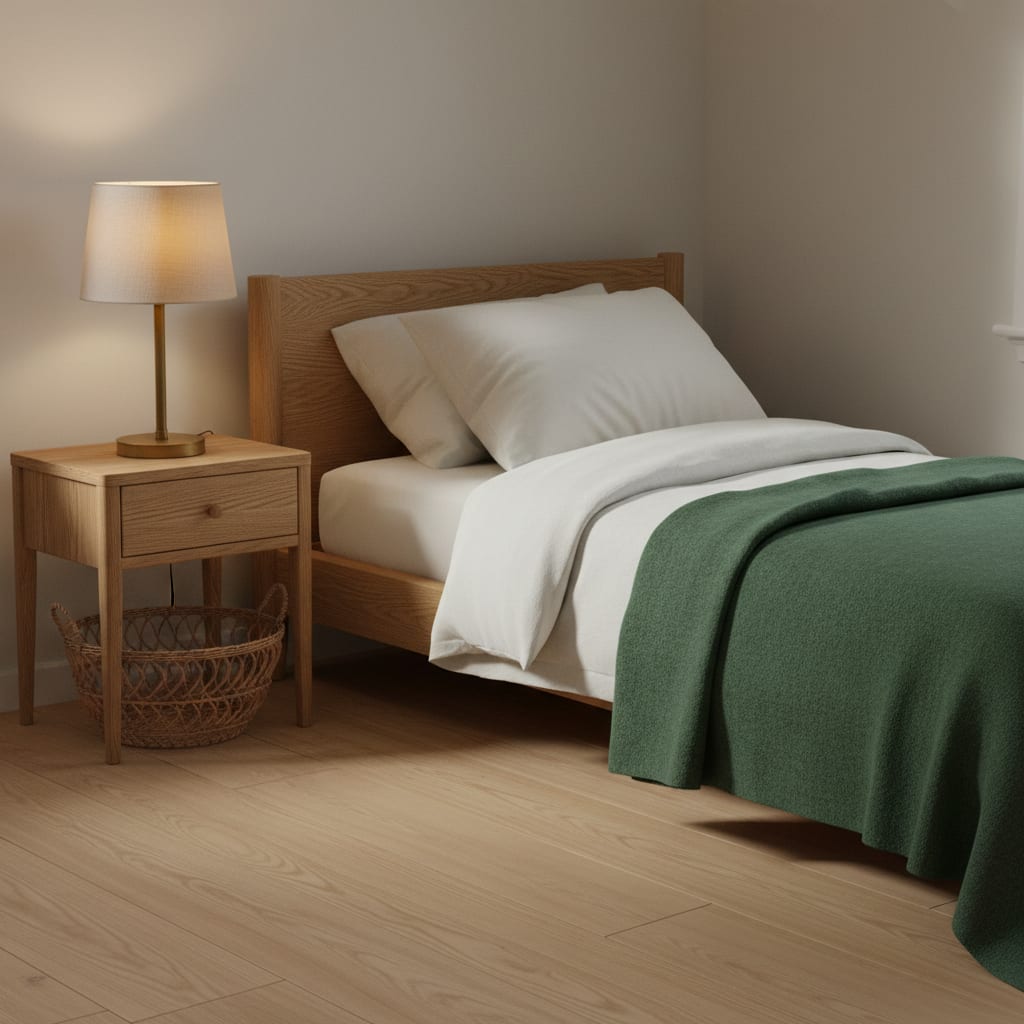
For an early reader of about five to eight, ten to fifteen minutes of reading alone in bed works well as the last step of bedtime. It only works if three things are settled before the child gets into bed. The book is an easy, familiar one, well below what you teach at the table. The light is a small, warm lamp, not a screen. And the ending is decided in advance: a set number of pages or one chapter, then lights out, every night. Without those three, it turns into another way to stay up.
A homeschool day already holds a lot of reading, so the bedtime minutes need a different job. At the table, reading is work. In bed, it should be practice the child can do without help.
Why reading alone can be the last step
The AAP’s HealthyChildren site lists reading among the calm things a school-aged child does at the end of the day. Its page on bedtime routines for school-aged children talks about a tidy room where it’s “more pleasant to rest and read or listen to music and stories.” The same page says that as children get older, parents “should gradually begin to step back and let him become more in charge of his bedtime routine.”
Independent reading is a natural first piece to hand over. The bath and teeth stay yours; the last few minutes become theirs, and the day ends on something they can do by themselves. It doesn’t replace reading aloud. In our house the read-aloud comes first, then the child takes their own book and the parent leaves the room.
What to read: easy, familiar, below teaching level
A child who takes the current phonics reader to bed is still doing a lesson, alone and tired, with nobody there when a word won’t come.
Choose books the child can read without stopping. Reading Rockets’ Launching Young Readers series, in an article by Akimi Gibson and Judith Gold, puts it simply: “Children need to reread familiar books and read new books leveled to their abilities.” It adds that rereading favorites “is not only a great way for children to build fluency; it is also a wonderful way to create a library of stories to remember” (PBS / Reading Rockets on fluency). The bedtime basket is for the first half of that sentence; new, harder books belong to the daytime.
In practice that means:
- Books they have finished before. A decodable reader from two months ago, now easy, is ideal. So is a picture book they know nearly by heart.
- Short and calm. A book that ends within the time you allow, or an early chapter book with short chapters. Save the cliffhanger series for the morning.
- Chosen before bed, not in it. Two or three books go into a small basket by the bed during the tidy-up, before teeth, not under the covers.
If you’re still at the stage of blending three-letter words, the step-by-step sequence in teaching your child to read at home comes first. Until a child can read something alone with ease, a familiar picture book to retell to themselves does the same job.
The light: a warm lamp, not a screen
The AAP’s guidance on sleep habits is clear on two points. Dim the lights before bedtime. And keep “all screens—TVs, computers, laptops, tablets and phones out of children’s bedrooms, especially at night,” with every screen off “at least 60 minutes/1 hour before bedtime” (HealthyChildren on healthy sleep habits).
That rules out tablets for this slot. A small bedside lamp with a warm bulb is enough. If the room is shared, a clip-on book light is better, because it lights the page and not the room. An example is a Glocusent clip-on book light, which its listing describes as rechargeable with three amber color settings and five brightness levels.
If daytime lessons are screen-heavy, homeschool screen time and your toddler’s sleep shows where to put them.
How long, and how to end it
HealthyChildren recommends keeping the whole bedtime routine to “no longer than 30 minutes,” and warns that routines “can be drawn out almost indefinitely” once a child learns that taking charge delays bed. Its fix is limited choices: “Let him choose a story and a song, but not a whole book.” It also names “stalling and resisting going to bed” as one of the most common sleep problems in children.
So give the reading a fixed size, and agree it before the lamp goes on:
- Set it in pages or chapters, not minutes. “One chapter” or “this book and that’s it” is easy for a six-year-old to see. Most early readers can’t read a clock yet, and a timer is one more thing to argue with.
- Ten to fifteen minutes is plenty. That’s our rule of thumb, not a published figure. It leaves the reading inside the 30-minute routine with room for teeth and a read-aloud.
- The lamp goes off when the book does. If the child can’t yet do this reliably, come back in at the agreed point and do it together.
- Same ending every night. Not “one more chapter because it was good.” The night it stretches is the night it becomes negotiable.
If reading in bed turns into lying awake for an hour, look at the bedtime rather than the book. Is a later bedtime OK for young kids? covers how to tell whether the clock you’ve chosen fits the child.
Fitting it around a younger sibling’s bedtime
Most homeschool families with an early reader also have someone smaller, and the toddler usually goes down first. That can work in the reader’s favor. Their reading slot can be the time while you settle the youngest, or just after.
Separate rooms. Put the toddler down, then go to the reader. Do the read-aloud, the book basket, the lamp. The older child gets a later lights-out without any extra time with you. HealthyChildren notes, about older children, that “lights can go out at different times for different children in the family, depending on how much sleep they need.”
Shared room. Here the light matters most. Either the reader reads elsewhere, on your bed or a sofa corner, and moves to their own bed when the book ends, or they read in bed with a clip-on light angled at the page. If the toddler only settles with the sibling in the room, when a child will only sleep with a sibling in the room covers how to keep or change that.
The toddler’s books. HealthyChildren’s page on sharing books with a preschooler suggests 20 to 30 minutes of book sharing with the TV off as part of the bedtime routine, and notes that a four-year-old may “pretend to read a favorite book aloud to you.” The little one gets read to; the big one reads alone. For the youngest’s books, Betteroo’s age-by-age picks for read-alouds from babyhood through the preschool years is a useful list. It also suggests settling the number of books before you start, which works just as well for the reader.
FAQ: independent reading at bedtime
Should my child read alone or with me at bedtime?
Both, if you have time. Read aloud first, then hand over to their own book. Reading aloud gives them stories above their own level. Reading alone gives them easy practice and a calm last step.
What if my early reader wants to read the hard book in bed?
Let them keep it for the daytime. Bedtime books should be ones they can read without help. A child stuck on a word with nobody there either calls you back or gives up, and neither helps them fall asleep.
Can my child read on a tablet or e-reader at bedtime?
The AAP advises keeping screens out of bedrooms and switching them off an hour before bed. Use paper books and a warm lamp for this slot.
If the younger sibling’s bedtime is the part that keeps slipping, Betteroo’s free sleep quiz builds a personalized sleep schedule for children from newborn through age 6. Once the toddler’s evening is predictable, the reader’s slot after it usually is too.