Rebuilding Sleep After a Hospital Stay or Procedure
After a hospital stay or day procedure, most young children’s sleep goes back to square one — waking hourly, refusing the crib, needing to be held, sometimes losing a nap. That’s normal and temporary, and the rebuild works best in stages: comfort and medical instructions first, then the room, then the timing, then the falling-asleep habit — that order, not all at once. Expect two to four weeks. Anything about pain, medication, feeding or wound care comes from your discharge team, not a blog; this post is only about the sleep afterward.
I’m writing this for homeschooling families, because we’re the households that don’t hand the recovery week to somebody else at 8am. The convalescing child is home, the well children are home, the teaching is home, and it all runs through the same tired adult.
Why sleep resets so completely
Nothing about a hospital is built for sleeping. Lights stay on, someone checks vitals at 2am, machines are audible, and a child sleeps in a strange bed with a parent’s hand on them the whole time. In three days a child can thoroughly learn that sleep happens while being held, in the light, in noise. That isn’t a bad habit — it’s an accurate lesson about the place they were in.
Then there’s the separation piece. A child who was somewhere frightening will often be far clingier at bedtime for weeks afterward, and bedtime is the moment separation is required. Betteroo’s guide to separation anxiety at bedtime describes the pattern well — it’s a phase with a shape, not a permanent change.
And if your child is still unwell or uncomfortable, that comes first. The rules while a child is ill differ from the rules for rebuilding afterward — Betteroo’s notes on sleep while a child is sick are a reasonable orientation, and your discharge instructions outrank all of it.
Stage one: the week you don’t fix anything
Hold everything. Contact-nap them, sleep on the floor by the cot, feed at 2am, do whatever gets everyone through — and don’t count any of it as a habit you’re forming. A week of holding is not a month of holding. A child who has just been through something needs to conclude that home is safe before they’ll be alone in it.
The one thing to do this week is keep the sequence of the bedtime routine intact even when the content is nothing like normal. Same three things in the same order — bath, book, song — even if it all happens in your bed with the lamp on. The sequence is the handle you’ll pull later.
Stage two: rebuild the room, not the child
Once your child is comfortable and cleared for normal life, change the environment before you change any expectation of them. Easiest step, most work done.
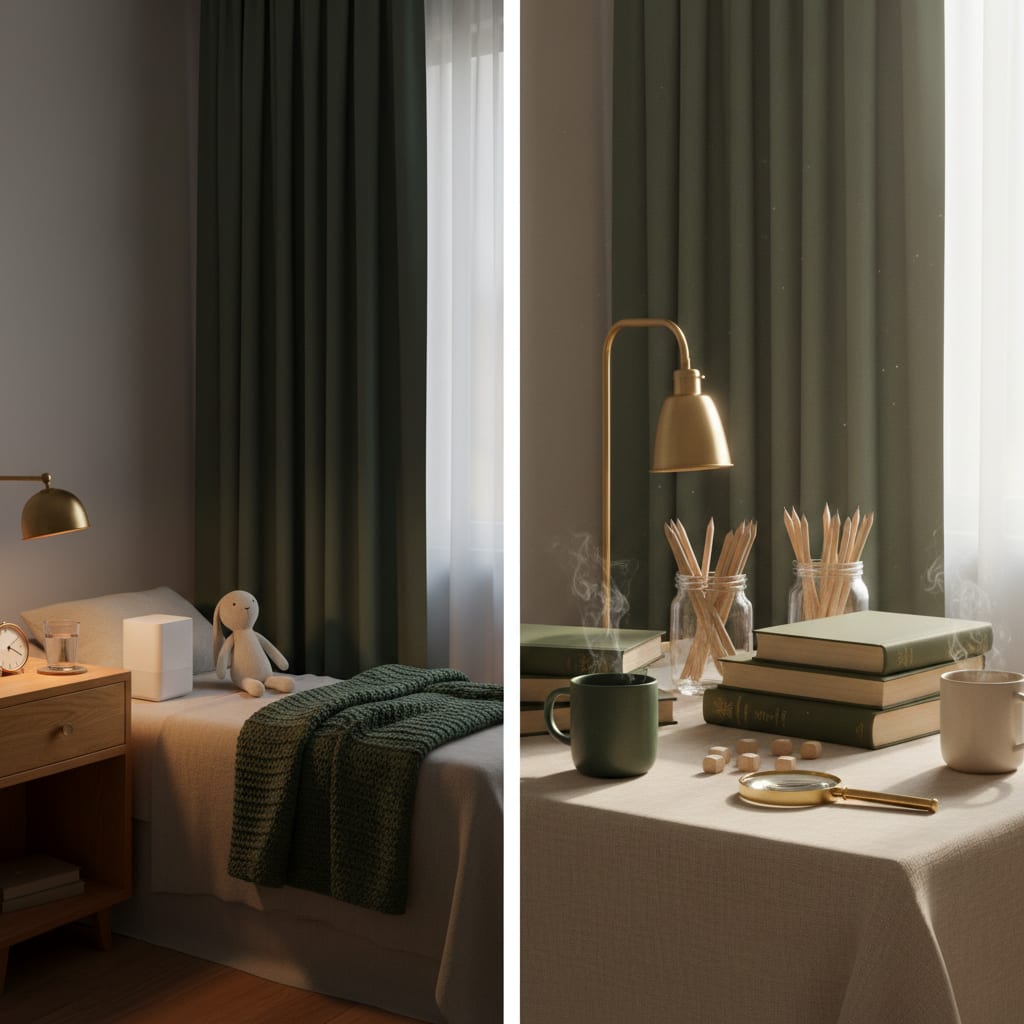
Get the room properly dark, restore steady sound, and put the temperature back where it was. A hospital room is bright and noisy; a silent black bedroom is such a total contrast that some children find it worse for a while. Steady low sound is the bridge, and the one place I’d spend money — a mechanical machine like the Yogasleep Dohm makes a non-looping sound without the artificial edge of a phone app on repeat. A fan pointed at the wall does the same for nothing.
Then put back the physical things that mean sleep: their own sleeping bag, their own lovey, the same cot sheets. If a hospital blanket came home and has become the beloved object, keep it. You aren’t going to win that one and don’t need to.
Stage three: fix the timing before the habit
This is the step families skip, and it’s why rebuilds stall. A disrupted week or two leaves the schedule genuinely scrambled — naps at odd hours, a bedtime that drifted to 10pm, a 5:30 morning. If the timing is wrong, no settling approach works, because the child isn’t tired when you’re asking them to sleep.
Fix the wake-up time first, then the naps, then bedtime — that order, because the morning anchors everything after it. Move each in fifteen-minute steps every couple of days rather than one jump. If a nap was lost entirely, rebuild it at the old time in the old place and accept quiet resting rather than sleeping for the first week; a lot of naps come back on their own once the room and the timing are right.
Only when the day is back in shape do you touch the falling-asleep habit — and then one change at a time, with the routine you preserved in stage one. Sit by the cot instead of holding. Then sit further away. Most children who were sleeping independently before get back there within a week or two.
Teaching the rest of the house through it
The other children have had a strange fortnight too, and the school week is going to be poor. Plan it that way rather than discovering it.
Drop to a minimum day — read-aloud, math, one thing they choose — and let the rest go. This is exactly what loop scheduling is for: nothing is “behind” because nothing was assigned to a particular day, so you pick the loop up where it stopped. Protect the one solid teaching hour you can still get, which in a house with a napping child is the nap; the ideas in quiet time activities for big kids decide whether that hour exists. And put the well children to work being useful to the recovering one, which handles the resentment better than any conversation does.
Then bank it. A fortnight of minimum school inside a year is a rounding error, and the record-keeping book can say “recovery week — light” without a shred of guilt attached.
When to ask for help rather than wait it out
If disruption is still total a month on with the room, timing and routine back in place, ask your pediatrician first: it occasionally has a physical cause — breathing, reflux, discomfort — worth ruling out, and that’s a medical question, not a schedule one.
If it’s a schedule that fell apart and won’t reassemble, structured help starts to pay for itself. We used Betteroo after our own two-night stay: a quiz about your child and the approach you’re comfortable with, then a day-by-day plan for naps and bedtime that adjusts as things change. The balanced verdict stands — a tool, not magic, around $20 a month, and a family whose sleep is already returning doesn’t need it. Its value here was telling me what order to fix things in when I was too tired to work it out.

FAQ: sleep after a hospital stay
A full sleep reset after a hospital stay is normal and usually resolves in two to four weeks. Rebuild in order — comfort, then the room, then the daily timing, then the falling-asleep habit — and treat anything medical as a question for your child’s care team.
How long does it take for a child’s sleep to recover after hospital?
Commonly two to four weeks for a short stay, longer after a bigger procedure or several nights in. Bedtime clinginess often outlasts the sleep disruption itself by a week or two.
Should I sleep train right after a hospital stay?
No. Give it at least a week of comfort-first nights, and wait until your child is well and cleared for normal routines. Restore the room and the daily timing before changing anything about how they fall asleep.
My child won’t sleep alone since the hospital. Is that permanent?
Almost never. It’s usually a separation-anxiety spike attached to a frightening experience, and it fades as home reasserts itself. Rebuild the distance in steps — beside the cot, across the room, the doorway — not all at once.
Do naps come back on their own after an illness or procedure?
Often yes, once the room and wake-up time are back in place. Offer the nap at the old time in the old place for a week, accepting quiet resting instead of sleeping; if it hasn’t returned, treat it as a timing problem and adjust the morning first.
When should I call the doctor rather than fix the schedule?
If disruption is still total a month on despite a dark room, a steady schedule and a consistent routine — or at any point if there’s snoring, laboured breathing, pain, or a change in feeding. Those are medical questions, and they come before any sleep plan.