Monsters Under the Bed: Calming a Preschooler's Fear
A preschooler who is scared of monsters under the bed needs comfort, not an argument. What helps most is a calm, predictable bedtime, a quick check of the room if it reassures your child, a dim night light, and no scary stories or shows in the evening. Then use the daytime to make the monster smaller: talk about it, draw it, give it a silly ending. Fears like this are common in the preschool years, when imagination outruns the sense of what’s real, and most fade with time. If they’re keeping your child from sleeping most nights, talk to your pediatrician.
In a homeschool house, the monster has some help. The preschooler hears every chapter of the big kids’ read-aloud, there’s an eight-year-old who knows exactly which story will do the most damage, and the child is home all day to think about it. The good news is that the same setup gives you more tools than most families have.
Why preschoolers believe in monsters
At three or four, a child’s imagination is vivid and their grip on what’s real is still forming. They know, in daylight, that monsters are pretend. In a dark room at bedtime that knowledge is much harder to hold on to. KidsHealth, the Nemours site for parents, puts it well in its guide to nightmares: by about preschool age, children “begin to understand that a nightmare is only a dream,” but “knowing that doesn’t prevent them from feeling scared.”
KidsHealth also notes that dreams seem to be one way children work through worries, and that stress or change, such as a move or “the birth of a sibling,” can be reflected in unsettling dreams. And it names the thing every homeschool parent should hear: for some children, “especially those with a good imagination, reading scary books or watching scary movies or TV shows just before bedtime can lead to nightmares.”
Bedtime: comfort first, argument never
Telling a frightened four-year-old that monsters aren’t real rarely works at 8pm, because they already know it and they’re still scared. These help more:
- Acknowledge the feeling. “You’re scared. I’m here.” The feeling is real even if the monster isn’t.
- Check the room, once, if it helps. The AAP’s HealthyChildren page on nightmares suggests seeing whether something in the room is scaring your child, “like shadows,” and if so, making sure it’s gone. KidsHealth goes further for preschoolers with vivid imaginations: “check the closet and under the bed, reassuring your child that all’s clear.” Do it calmly and briefly, as a ritual, not a search.
- Fix the shadows. A coat on the door or a pile of toys can become something else in the dark. Move them before lights-out.
- Use a dim night light. KidsHealth suggests a night light or hall light to help children feel safe in the dark. A warm, low glow like the GE SleepLite amber night light is enough to see the room by without lighting it up.
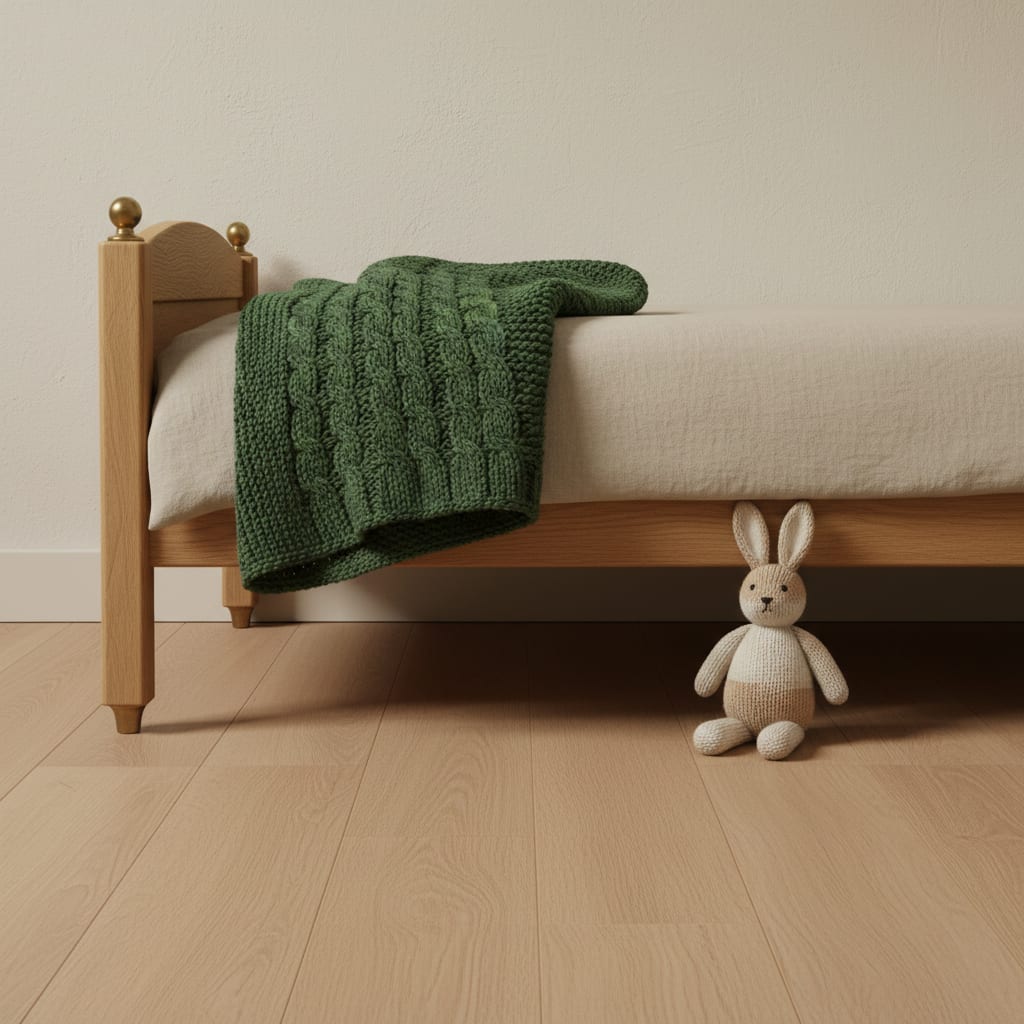
- Give them a companion. A favorite stuffed animal on guard duty is an old trick, and KidsHealth lists one among the things that make a bed “a cozy, peaceful place.”
- Keep the routine the same. Bath, teeth, one book, lights out, in the same order every night.
One thing to avoid: using monsters as a threat, even as a joke. “The monster will get you if you’re not in bed” is exactly the kind of line a preschooler remembers at 2am.
Use the daytime to shrink the monster
This is where a homeschool family has a real advantage. KidsHealth points out that in the morning a child may want to talk about a scary dream, and that “talking about it — maybe even drawing the dream or writing about it — in the daylight can help scary images lose their power.” It even suggests “thinking up a new (more satisfying) ending.”
Most families get ten minutes before the school run. You have the whole morning. Ideas that work at the kitchen table:
- Draw the monster. Then make it ridiculous: give it a party hat, socks, a tiny voice. A monster in rainbow socks is hard to fear.
- Write its story. Let the preschooler dictate while you write. Older siblings can help with the ending, which also turns them from the problem into part of the solution.
- Read monster books in daylight. Picture books where the monster turns out to be friendly or silly can help, but read them in the morning, not at bedtime.
Keep it light and short: the aim is a boring monster, not the subject of the week.
The read-aloud problem, and the sibling problem
Read-alouds. Homeschool families read a lot, often to several ages at once. A chapter of an adventure story pitched at an eight-year-old can be full of witches, wolves and caves. A three-year-old on the rug is listening too. You don’t need to stop. Just move the dramatic chapters to the morning, during morning basket time or before lunch, and keep the last book of the day calm for the youngest. The same goes for shows and videos: scary content earlier, if at all, and nothing frightening in the hour before bed. Where screens fit into a homeschool day is covered in homeschool screen time and your toddler’s sleep.
Siblings. Older children sometimes tease, and sometimes simply tell a scary story they loved without knowing how it lands. Have a calm, private word with the big kids: monster stories happen in daylight, and nobody says “there’s something under your bed” at night, even as a joke. Older siblings can also be a comfort. If the preschooler shares a room, a big brother or sister falling asleep nearby is reassuring in its own right. If that habit is becoming a problem of its own, we’ve written about a child who will only sleep with a sibling in the room.
Is it a nightmare or a night terror?
Sometimes the fear comes in the middle of the night instead of at bedtime, and it helps to know which kind of waking you’re seeing, because the response is different.
- A nightmare is a scary dream your child wakes from and remembers. HealthyChildren says nightmares often happen “during the second half of the night,” can start very young, and peak between 3 and 12 years old. The best response is to comfort them, tell them you’re there, and, once they’re ready, help them back to sleep.
- A night terror happens in deep sleep, usually earlier in the night. Your child may scream or thrash with their eyes open but isn’t really awake, and won’t remember it. The NHS advises staying calm, not trying to wake them, and keeping them from hurting themselves. Betteroo has a calm explainer on what night terrors look like and how to respond if that sounds more like your nights.

When to talk to the doctor
Most monster fears pass with time, comfort and a steady routine. KidsHealth suggests talking to your child’s doctor if nightmares happen “more than once a week,” often keep your child from getting enough sleep, or come along with other emotional or behavioral troubles. The NHS adds frequent nightmares, or nightmares that follow an upsetting or frightening event. It’s also worth a call if the fear spills into the daytime and your child is frightened most of the day.
FAQ: monsters under the bed
Should I check under the bed for monsters?
If a quick, calm check reassures your child, it’s fine. KidsHealth suggests checking the closet and under the bed with young children. Keep it short and the same each night, so it becomes part of the routine rather than a search.
At what age are children afraid of monsters?
Fears like this are common in the preschool years, when imagination is strong and the line between pretend and real is still forming. Most children grow out of them.
Should I tell my child monsters aren’t real?
You can say it, gently, but don’t expect it to stop the fear at bedtime. Comfort, a dim light and a steady routine help more at night. Daytime talking and drawing is the time to build up the “it’s pretend” side.
Can scary read-alouds cause nightmares?
For some imaginative children, scary books or shows close to bedtime can lead to nightmares, according to KidsHealth. Move exciting chapters to the morning and keep the last story of the day calm.