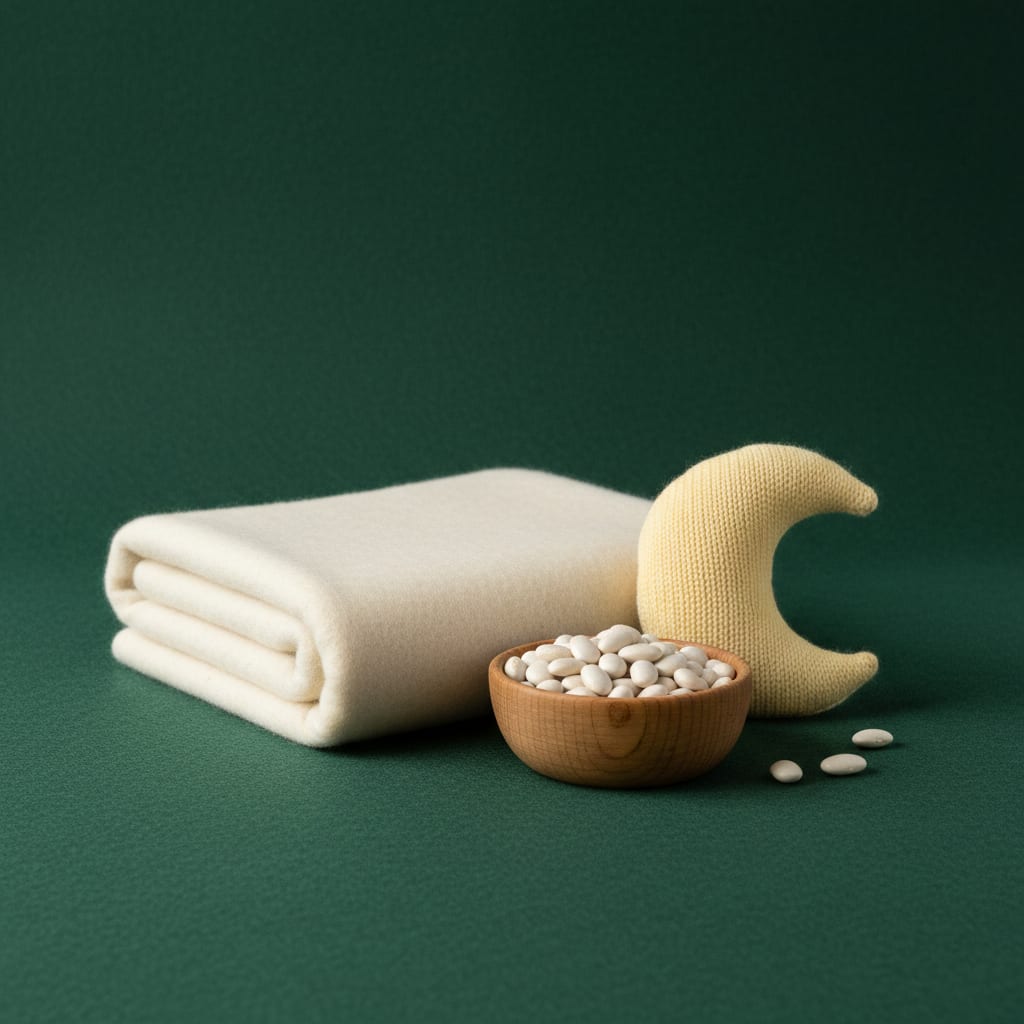
A homeschool unit on sleep takes about a week of short lessons and needs almost no equipment. Teach four ideas: what the body and brain do during sleep, the two systems that make us sleepy, the cycles a night is built from, and how many hours a child’s age calls for. Then hand over the arithmetic. A child who has counted back from their own wake-up time and arrived at their own bedtime argues with it far less than one who was simply told. The unit won’t make anyone sleepy on command. It does change who the bedtime belongs to.
Why sleep earns a week of science
Sleep is human biology your children can observe on themselves every day: a real question, things to count, and a result that matters at 8 p.m. The plain facts are also persuasive. The National Institute of Neurological Disorders and Stroke opens its Brain Basics page on sleep by saying quality sleep “is as essential to survival as food and water,” and that without it “you can’t form or maintain the pathways in your brain that let you learn and create new memories.” A child who has just spent a morning on multiplication facts has an interest in keeping them.
This plan is pitched at roughly 6 to 10. Each lesson is 20 to 30 minutes and follows the habit from science without a lab: predict first, then observe, then write down what you saw.
Day 1: What is sleep for?
Start with the prediction. Ask “what do you think your body does while you’re asleep?” and write the answers down unedited. “Nothing” is the answer the week will overturn.
Then give them three jobs, each from a source you can show them:
- Growing. The National Heart, Lung, and Blood Institute’s page on why sleep is important says that “in children and teens, sleep also helps support growth and development.” Nemours KidsHealth’s Kids and Sleep adds that deep sleep is the stage when “the body releases hormones needed for growth and development.”
- Remembering. The same NHLBI page: “Sleep helps with learning and the formation of long-term memories.”
- Fighting germs. NHLBI again: when you sleep, “a particular type of immune cell works harder. That is why people who do not sleep enough may be more likely to get colds and other infections.”
NINDS also notes that “recent findings suggest that sleep plays a housekeeping role that removes toxins in your brain that build up while you are awake.” Keep the word “suggest” when you teach it; where scientists are still unsure is part of the lesson.
Observation: NHLBI says that during sleep “you breathe less often and less deeply.” If you have a napping toddler, let an older child stand quietly at the door and count breaths for one minute, then count their own while sitting still. Record both numbers. No toddler? Count a sleeping pet’s.
Day 2: The two clocks
NINDS explains that “two internal biological mechanisms—circadian rhythm and homeostasis—work together to regulate when you are awake and when you are asleep.” For children, call them the body clock and the sleep tank.
The sleep tank. The drive to sleep “gets stronger every hour you are awake.” Put an empty bowl on the table at breakfast and have a child drop in one spoonful of dried beans every hour they’re up. By evening the bowl is full. Tip it out the next morning: sleep is what empties it. Betteroo’s guide on how that build-up behaves in babies and toddlers is useful background for the parent if there’s a little one whose naps puzzle the older children.
The body clock. NINDS describes a clock “based on a 24-hour day” and says that melatonin, a hormone, “helps you feel sleepy when it gets dark.” Light is the big input: “specialized cells in the retinas of your eyes process light and tell the brain whether it is day or night.” In November this teaches itself: have the children note when it gets dark for a few evenings and how they feel an hour later.
Day 3: A night is made of cycles
NHLBI’s page on sleep phases and stages says we cycle through non-REM and REM sleep, and that “the cycle starts over every 80 to 100 minutes.” KidsHealth puts a school-age child’s cycle at “about 90 minutes.”
Have your child draw the night as a row of hills, one per cycle, and label what NHLBI says about each part:
- Deep sleep comes mostly early: “you usually spend more time in this stage early in the night.”
- REM sleep comes mostly late. “Dreaming usually happens during REM sleep,” and your muscles “normally become limp to prevent you from acting out your dreams.”
The math follows naturally: if a cycle is about 90 minutes, how many fit in the night you slept last night? Let them do the division.
Day 4: Dreams
Keep this day light. NINDS says “everyone dreams,” that you spend “about two hours each night dreaming but may not remember most of your dreams,” and that the “exact purpose isn’t known.”
For the writing lesson, do a dream narration at breakfast: the child tells it, you write it down, or an older child writes three sentences. If your children like a book to anchor a unit, Cathy Evans’s illustrated Why Do We Sleep? is a 48-page nonfiction picture book covering body clocks, sleep stages, dreams and how animals sleep. Retailers disagree on the age range, so look inside before you buy, or ask your library.
 Too young for the unit, still up at nine?
Betteroo builds a personalized sleep plan for children from newborn through age 6, for the sibling who can't be reasoned into bed yet.
Take the 2-minute sleep quiz →
Day 5: The bedtime math
Now the numbers. NHLBI’s recommended hours are a range, including naps for the younger ages:
| Age | Hours of sleep per day |
|---|---|
| 1 to 2 years | 11 to 14 |
| 3 to 5 years | 10 to 13 |
| 6 to 12 years | 9 to 12 |
| 13 to 18 years | 8 to 10 |
Give your child the row for their age and one question: “You get up at seven. When do you need to be asleep?” Let them count back on a number line, then talk about where in the range they seem to land. NINDS is clear that needs vary “significantly across individuals of the same age,” so the answer is a window to test, not a verdict.
Test it with a one-week sleep log: bedtime, wake time, and a morning mood score from one to five that the child sets. It’s real data collection, and it goes in the portfolio with the rest of your homeschool records.
The buy-in, and its limits
KidsHealth tells parents to “encourage older kids and teens to set a bedtime that allows for the full hours of sleep needed at their age.” The unit is how a younger child gets there early. In our house the shift was in the wording: bedtime stopped being “because I said so” and became “your number.”
Be honest about what it won’t do. Knowing about melatonin doesn’t produce any, and a child who understands sleep cycles will still ask for water. The facts must never turn into a threat (“you won’t grow”). The unit gives you a shared set of facts and a child-made bedtime; a steady bedtime routine still does the nightly work. If the math shows bedtime should move, shift it fifteen minutes at a time.
FAQ: teaching a sleep unit at home
What age is a sleep unit right for?
About 6 to 10 as written. A 4- or 5-year-old can join the bean bowl and the dream narration; older children can read the NIH pages themselves and graph the sleep log.
How long should the unit take?
Five lessons of 20 to 30 minutes, plus a week of logging. It fits one school week, or five Fridays.
Will it stop bedtime battles?
Not on its own. It removes the argument about whether the bedtime is fair, because your child worked the number out. Stalling still needs a routine and a limit.
What should I do if the sleep log looks worrying?
A log is a school exercise, not a diagnosis. NHLBI’s advice is to talk to your child’s doctor if you think your child is sleeping too much or too little.
Shelved in The Third Reader: Schedules & Rhythms
