Can You Remove Answers From a Worksheet? Our Small Unwriteit Test
Disclosure: This article is part of a no-payment collaboration with Unwriteit, which has agreed to link to it from its worksheet guide. We used the public free cleanup tool for one test on an original, digitally created worksheet. This was not a test of a child's handwriting or a printed workbook.
A worksheet can be useful more than once. Perhaps a child wants another attempt, or you want to use a page you created with a younger sibling. Before starting over, it can be tempting to look for a tool that removes the answers while leaving the questions in place.
We tried Unwriteit on a simple page made specifically for this demonstration. The result was promising for the number answers in our example, but it also showed why checking the finished page matters. A drawn shape stayed in the output, and the cleanup was not completely spotless.
What we put into the test
We created our own worksheet with printed questions, answer lines and a drawing box. We then added two digital number answers, a stray circle and a triangle inside the box. These were synthetic marks added to an image, not pencil or pen on paper. No child’s name, schoolwork or other personal information was uploaded.
That distinction matters. A photograph of real handwriting can introduce uneven lighting, shadows, paper texture and marks crossing printed text. Our clean digital image did not test those conditions, so it cannot tell you how the tool will handle your particular worksheet.
We used the free, no-signup cleanup and downloaded the result. We did not create an account, test a paid plan or compare a batch of different pages.
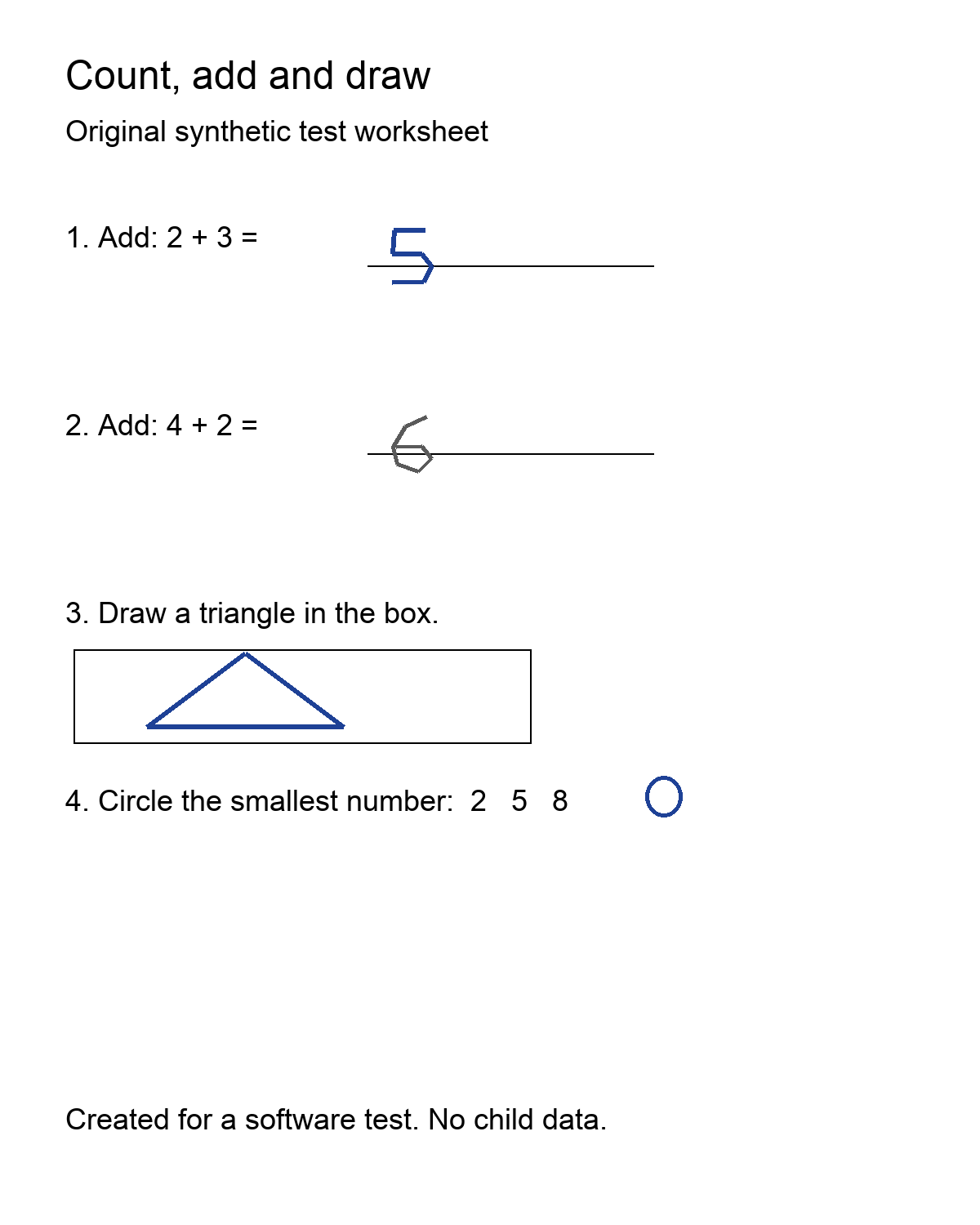
What disappeared, and what stayed
The two number answers and the stray blue circle disappeared. The printed questions, lines and box remained recognizable. The blue triangle inside the drawing box stayed, and a couple of small marks remained on an answer line.
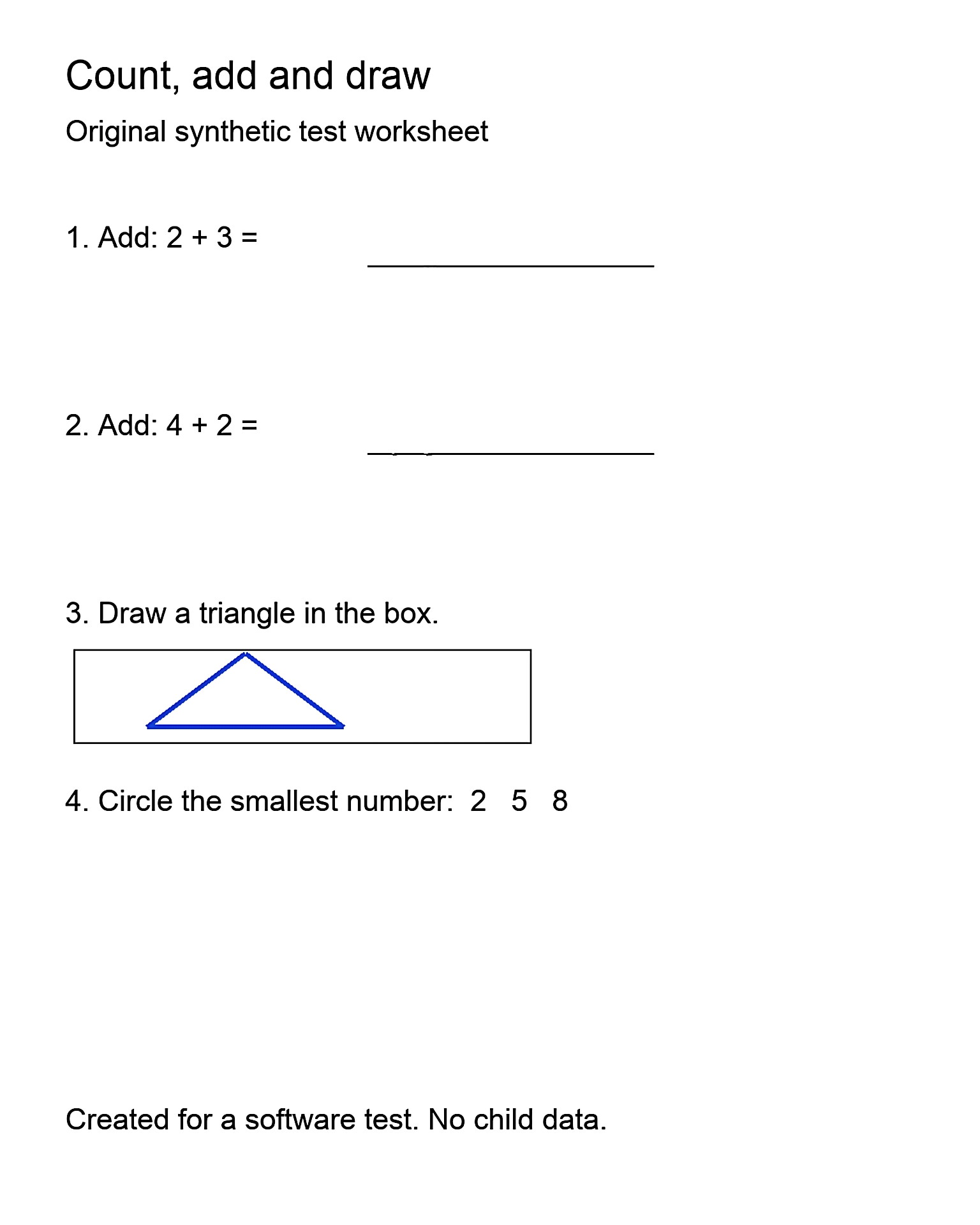
We asked the creator about the triangle. He explained that the tool is intended to separate handwriting from printed content, but drawn shapes may be retained. He also said there is no setting to switch drawing removal on or off. Our example fits that explanation; it does not demonstrate that every handwritten answer will disappear.
For a page where the exercise itself asks a child to draw something, this is a useful limitation to know. A cleaned page may still contain part of the previous response. Look at drawing boxes as carefully as written answer spaces.
Check the result before handing it over
Keep the original file and compare it with the download. Start with the instructions and question numbers. Then check symbols, punctuation and any small details that change the task, such as a minus sign or a dot in a pattern.
Next, inspect every answer space. A faint mark might offer an unintended clue, while a missing printed detail could make the question confusing. Zoom in on areas where answers overlap the original text. If the output needs extensive repair, returning to a clean original may be quicker.
Our result downloaded successfully, but we did not print it. Before making several copies of any cleaned worksheet, print one and check that the text and lines are readable at the size you intend to use.
Choose the right kind of page
Begin with a worksheet you created or have permission to adapt and reuse. Removing answers does not change a publisher’s copying license. If a purchased workbook is licensed for one learner, check its terms before making a fresh copy for someone else.
Use a copy without names or other personal details when possible, and review a service’s current upload and retention information before submitting a real child’s work. Our synthetic example let us explore the cleanup without uploading student information.
What this demonstration tells us
In this one digital example, Unwriteit removed the number answers and a stray mark while preserving the main printed layout. It retained a drawn answer and left small traces that needed inspection. That makes it a tool worth checking on an appropriate page, rather than a reason to skip reviewing the result.
A separate test on a genuinely handwritten, printed worksheet would be needed before we could describe that experience firsthand. For now, the practical takeaway is simple: keep the original, compare the cleaned version carefully, and decide whether the result is useful for the task your child will actually do.